


Households across Cannon Hill, Morningside and Seven Hills may see Urban Utilities crews carrying out property inspections in coming months as part of a wider effort to reduce wastewater overflows during heavy rain.
The three suburbs are among 31 Brisbane areas covered by the Wet Weather Overflow Reduction Program, which runs until 31 December 2026. Cannon Hill and Seven Hills sit alongside Morningside in Brisbane’s inner-east, bringing the program into a closely connected group of residential communities.

Urban Utilities says the areas were selected because of repeated wet-weather wastewater overflows or unusually high inflows recorded at pumping stations and treatment plants.
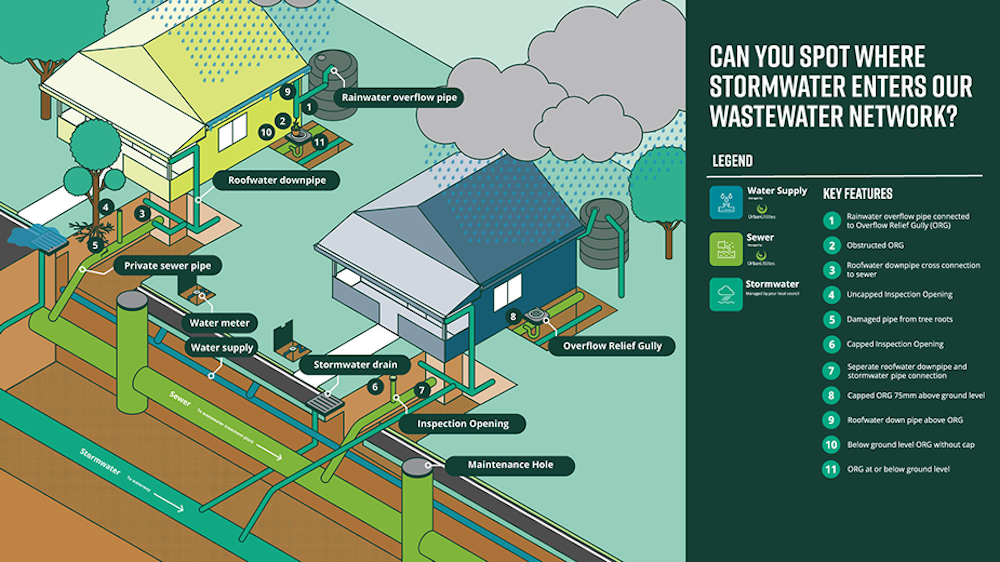
The problem occurs when stormwater finds its way into wastewater infrastructure that was not designed to carry large volumes of rainwater. Cracked pipes, faults around maintenance holes and incorrectly connected or non-compliant private plumbing are among the possible sources being investigated.
When heavy rain arrives, that additional water can substantially increase the volume moving through the wastewater system and contribute to overflows where the network is under pressure.
Smoke testing will help expose hidden connections
Urban Utilities is using smoke testing to track where stormwater may be entering wastewater pipes and private plumbing across the affected suburbs.
The process involves introducing non-toxic smoke into wastewater lines and checking where it emerges. In plumbing that is correctly connected, the smoke should move through the wastewater system and escape through normal sewer vents.
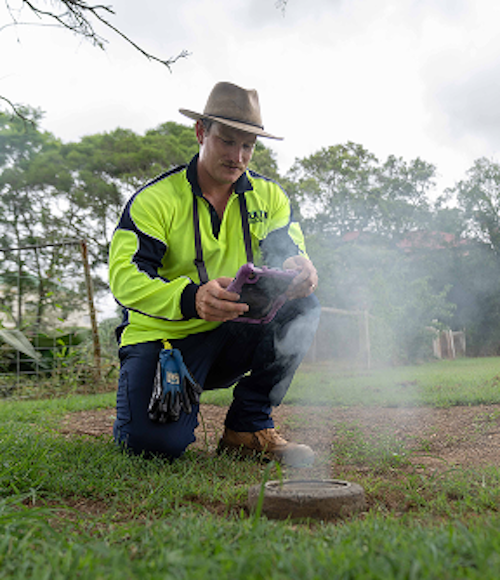
Smoke appearing from a stormwater drain, downpipe or another unexpected location can point investigators towards a possible defect or incorrect plumbing connection.
Smoke testing forms part of the wet-weather investigation, while Urban Utilities also carries out CCTV inspections, pipe cleaning and other works through its broader sewer maintenance program.
What residents need to know about property access
The investigation may require officers to enter private land to inspect plumbing, drainage and wastewater infrastructure.
Under Queensland legislation, officers acting under an approved inspection program may enter covered properties at a reasonable time without the occupier’s prior consent. The power is not unlimited, however, and cannot be used under the inspection program to enter any part of a property where a person resides.
Where someone is at home, officers must make a reasonable attempt to identify themselves, explain why they are entering and advise that the legislation permits entry without consent. Details of the approved inspection program must also be provided.
For residents, this means access to yards or infrastructure on private land should not be confused with an unrestricted power to enter the home itself.
Testing looks beyond household plumbing
Urban Utilities says wet-weather inflows can have several causes, including topography, defects in public wastewater infrastructure and problems with private plumbing.
The inclusion of a suburb in the program does not mean every property has defective plumbing, nor does an inspection automatically leave the homeowner responsible for repair costs. Testing is intended to establish where unwanted stormwater is entering the network before the appropriate response is determined.
Depending on the findings, further work could involve private plumbing, Urban Utilities infrastructure or a combination of both.
For residents across Cannon Hill, Morningside, Seven Hills and the wider Camp Hill area, the coming inspections are primarily about knowing what work is taking place, why access may be needed and what happens if testing uncovers a fault.
Published 13-Aug-2026