


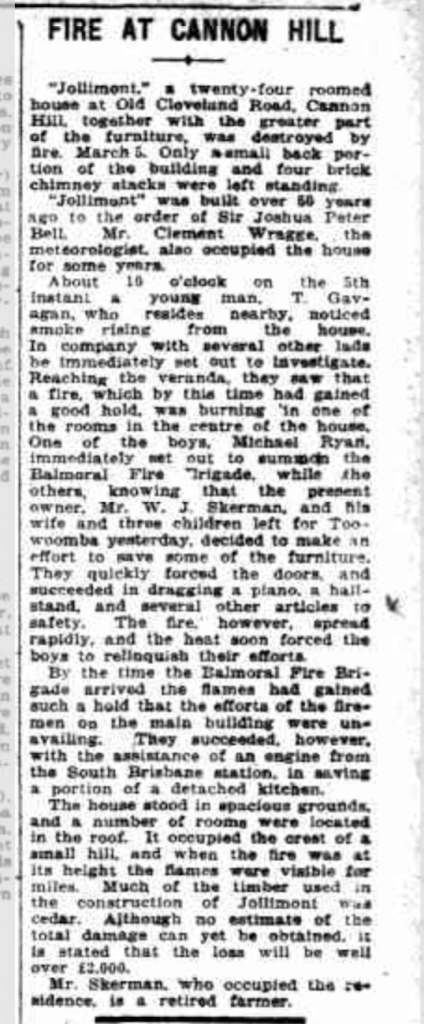
In March 1926, fire tore through Jolimount, the large former Weedon residence at Cannon Hill. Most of the house and its contents were lost, with only a grand piano and a carpet reportedly saved. The blaze destroyed more than the house’s cedar structure and most of what remained inside. It may also have destroyed records that could have helped explain how Cannon Hill got its name.
Before the Suburb, There Was a Mansion
In the 1860s, the sites between Bulimba and Tingalpa were rural, with several large-scale properties along New Cleveland Road, now Wynnum Road.

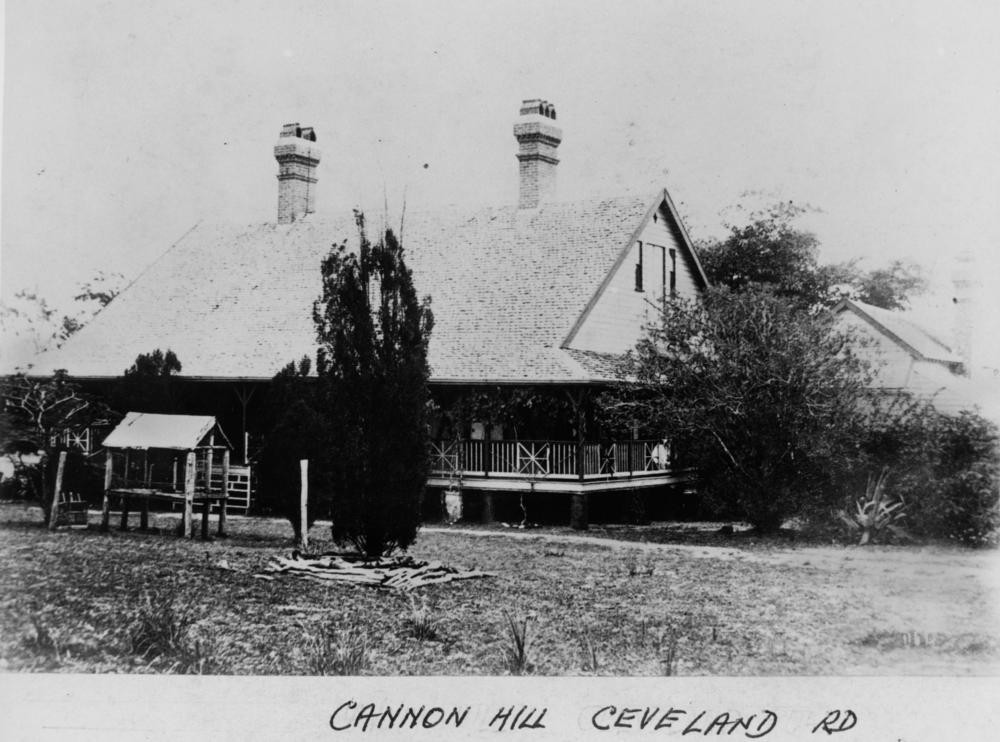
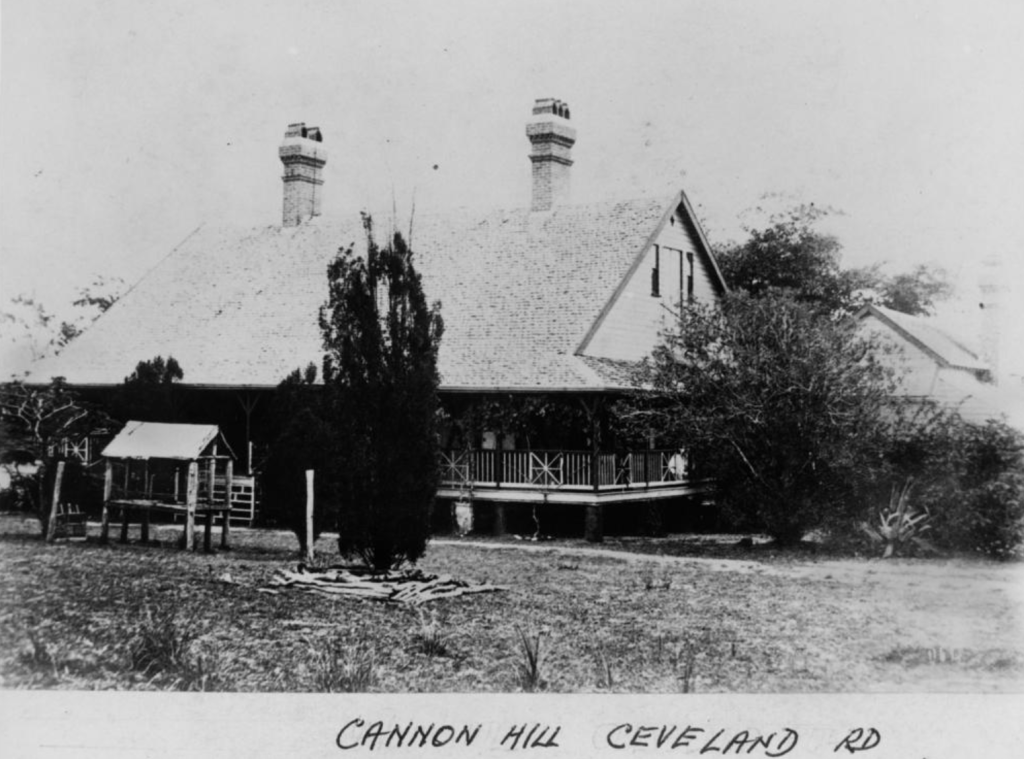
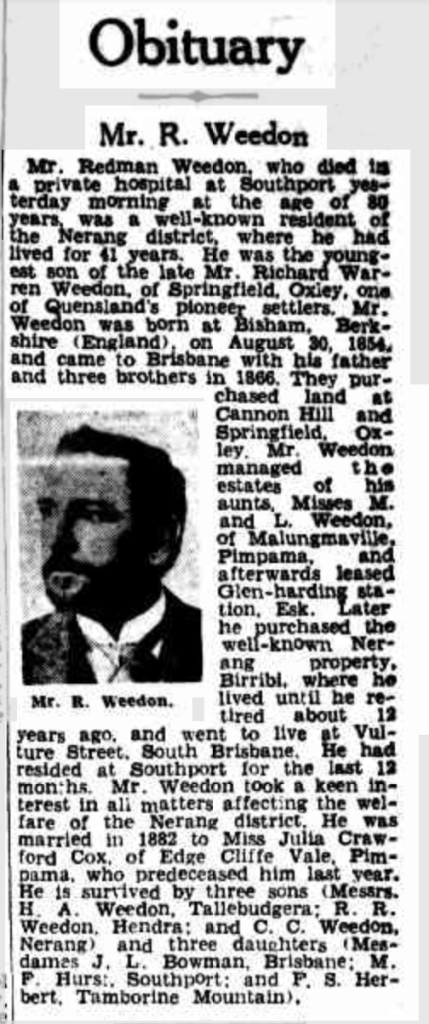
Around 1867, landowner Richard Weedon and his mother, Susannah, built a 24-room cedar home on their property. With its steep roof, two tall chimneys and separate servants’ quarters, the residence became a local landmark. The Weedons called it Cannon Hill House.
The property was known for its extensive grounds as well as its size. The gardens contained exotic trees, ornamental plants, and a maze said to have been modelled on the one at Hampton Court Palace.
The family also held massive social gatherings there, drawing members of Brisbane society to the property. Its prominence may explain how the house’s name came to be used to refer to the surrounding area.
Several Stories Behind One Name
Cannon Hill House may have given the district its name, but no record identified so far explains why the Weedons chose that name for their home.
Several accounts try to explain either the origin of the name or how it spread to the district.
One account says a surveyor noted two tree stumps that resembled cannon. Another comes from an early settler, Mr Woods, who claimed the name honoured his son Ernest after the boy sheltered inside a hollow log on the hill in 1864.

A third theory points to England. Richard Weedon’s wife, Elizabeth Redman, came from a family associated with arms manufacturing and, according to family history, the Birmingham Small Arms Company. Birmingham also had a place called Cannon Hill, raising the possibility that Richard borrowed a familiar English name.
The final explanation concerns the house itself. The prominent residence may have become a local reference point, allowing its name to spread to the wider district.
None of these theories has been proven.
When Cannon Hill House Became Jolimount
After Richard Weedon’s death, the family sold the estate, and the new owner, Mr Wragge, renamed the house Jolimount.
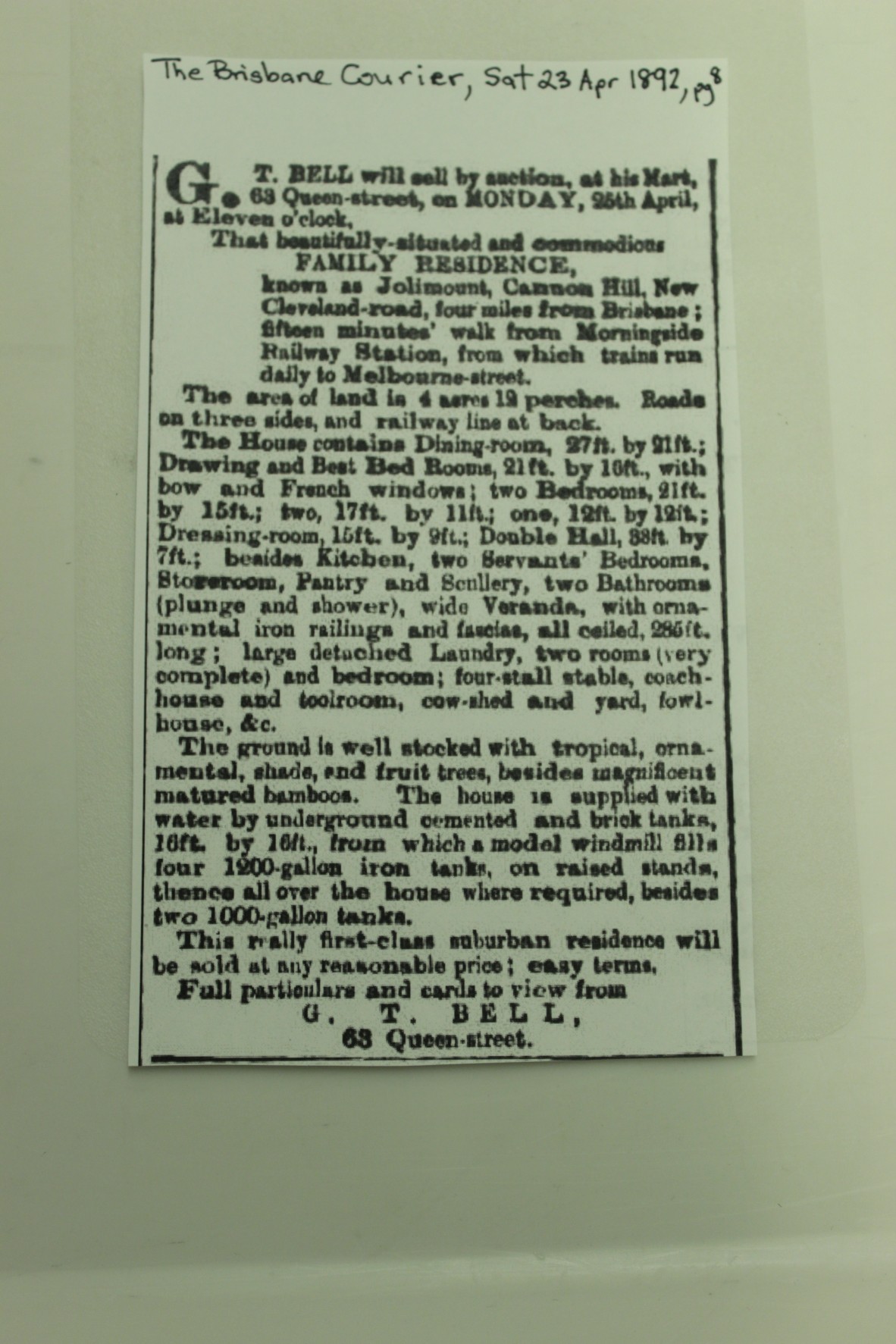
An auction advertisement published in The Brisbane Courier on 23 April 1892 described a large family residence on four acres and 19 perches, with stables, a coach house, and established gardens.
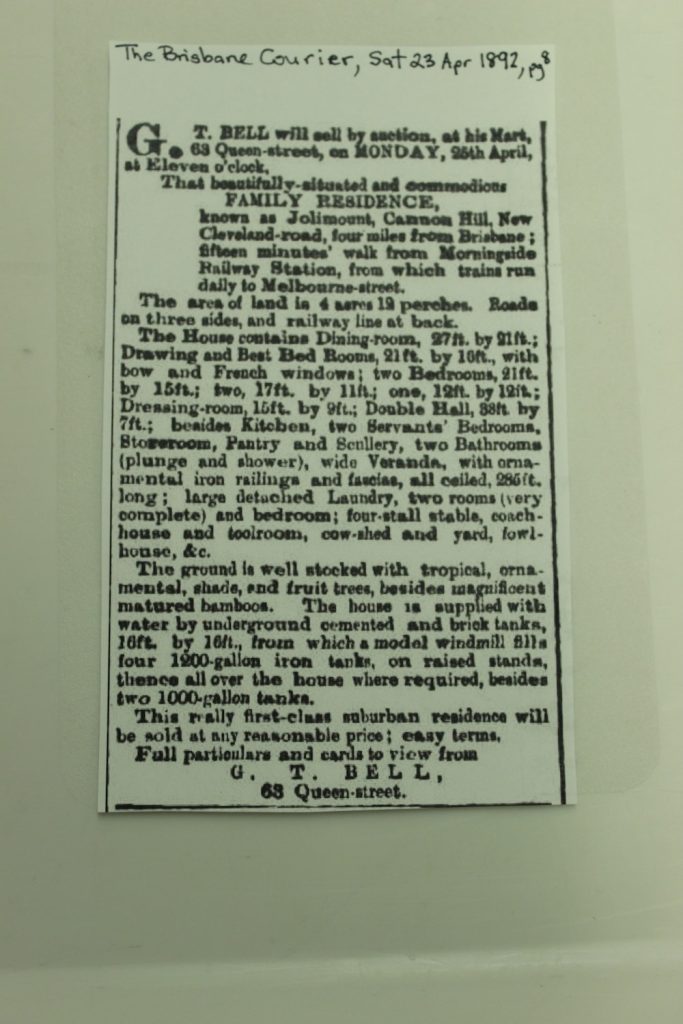
Importantly, the advertisement called the residence Jolimount but placed it at Cannon Hill. This shows that Cannon Hill was already established as the district name by 1892.
The Missing Clue
Jolimount stood until the fire destroyed it in March 1926. The house may have contained family papers that explained the name, although no evidence confirms that such a record existed or remained there at the time of the fire.
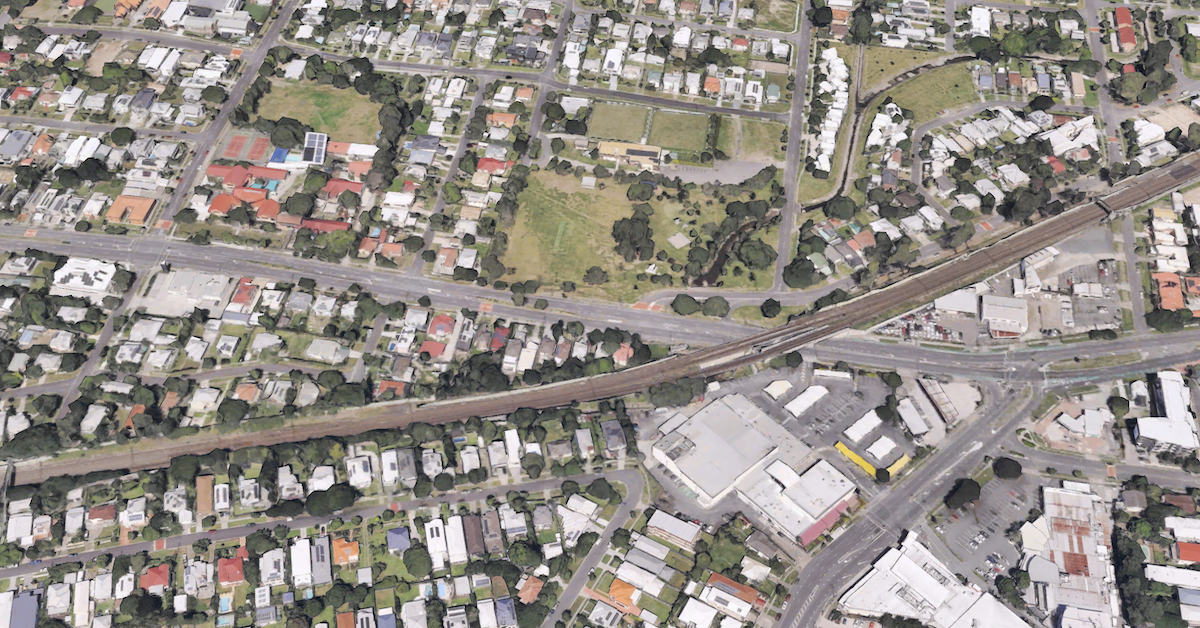
Perhaps the most convincing evidence indicates that the site of the former house is located on the northern side of Wynnum Road, directly across from today’s Cannon Hill State School at 845 Wynnum Road. This suggests that the site would be situated roughly among the current properties at 806–840 Wynnum Road in Cannon Hill, rather than on the school grounds.
Today, Cannon Hill is a developed residential suburb with schools, shops and a railway station. The Weedon mansion and its celebrated grounds are gone. Yet Cannon Hill remains the suburb’s name, preserving a possible link to the house that once stood on New Cleveland Road.
Published 23-July-2026