


The Gateway Bridge Turns 40 and There Is More to Its Story Than Most Commuters Realise

Did you know that the Gateway Bridge was once regarded as one of the world’s deadliest bridges? It is a sobering piece of history that the hundreds of thousands of road users who cross it on any given day may not be aware of, yet for a period in its early life, the bridge lived up to that unfortunate title.


Read: Over 1,500 Drivers Want Brisbane’s Tolls Gone — Here’s What It Means for Murarrie Commuters


For residents of Morningside and Murarrie who rely on it for the daily commute north to Brisbane Airport or up to the Sunshine Coast, the bridge is simply part of the daily routine. But as it marks its 40th anniversary this year, its story turns out to be one of the most dramatic in Brisbane’s history.

A solution to a city’s traffic chaos
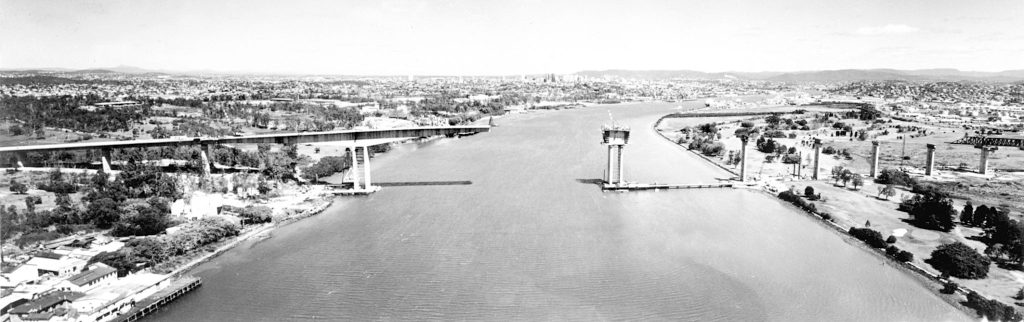
Gateway Bridge under construction, Brisbane, September 1984 (Photo credit: Queensland State Archives, Digital Image ID 3514)

The idea for the bridge took shape in the 1970s, when Brisbane was struggling under the weight of its own growth. Drivers needing to travel between the Gold Coast and the Sunshine Coast had no straightforward way around the city. The options were limited to slow car ferries or lengthy detours through congested inner-city crossings. Freight movements were slow-moving and commuters bore the brunt of it daily.

Roads minister Russ Hinze put forward a plan to fix it. A tunnel was looked at and quickly ruled out as too costly, so the focus shifted to a bridge. Engineers designed a structure high enough for ships to clear underneath, while keeping the deck low enough to stay out of the flight paths into Brisbane Airport, sitting just a stone’s throw from the southern end of the bridge at Murarrie.

Construction stretched over five years and the methods used would raise serious concerns by modern standards. Workers operated high above the Brisbane River in shorts and thongs, often without harnesses or hard hats. Yet the project was completed without any major incidents.

A bridge is born
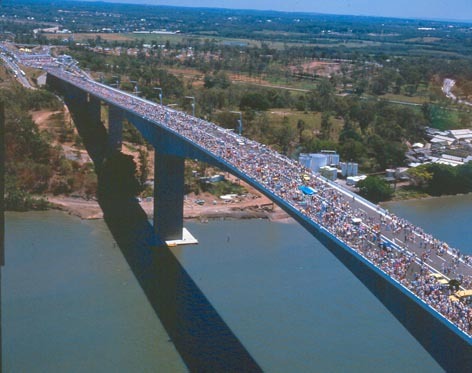
Opening day of the Gateway Bridge in 1986 (Photo credit: Facebook/Brisbane Libraries)

On 11 January 1986, the bridge threw open its doors to the public and Brisbane turned out in force. Around 200,000 people walked across the span in a single day, with blue, yellow and black balloons strung across the structure to mark the occasion. Journalists covering the opening described it as a rare opportunity to experience a world record concrete span up close.

Ordinary Queenslanders were similarly enthusiastic, with many declaring it the finest bridge they had ever seen. Prince Philip arrived four months later to make it official, remarking dryly that he declared the bridge to be more open than usual.

Motorists paid $1.50 for the privilege of crossing. Truck drivers paid $7. Not everyone thought it was worth it. One truckie at the time flatly refused, calling it too expensive.

The years that earned it a darker name

What came after the celebrations was far less uplifting. The bridge had been built with only a low barrier between pedestrians and the drop below, and in the years that followed, it became the scene of more than 120 deaths from accidents and suicides. 

A television reporter who broadcast live from the top of the bridge at the time noted for viewers that there were virtually no safety measures in place and that the only thing standing between a pedestrian and a fatal fall was a small wall.

The situation changed in 1993 when proper safety barriers, crisis phones and prevention measures were put in place. Community events including the Bridge to Brisbane fun run later helped welcome people back onto the structure under very different circumstances.

A second span and a new identity
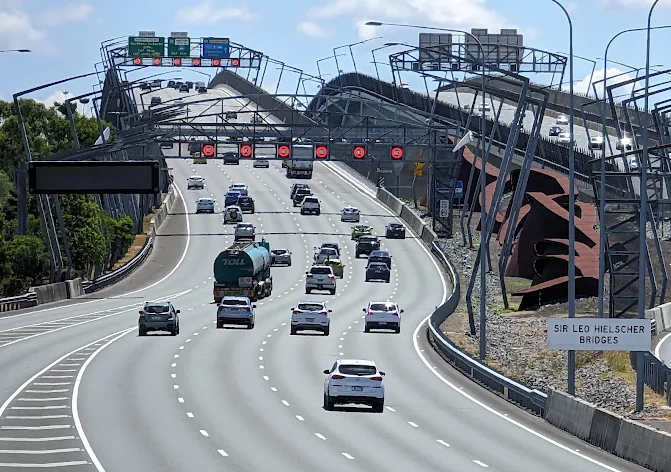
Photo credit: Google Maps/Andrew H

By the mid-2000s the original bridge was struggling to keep pace with Brisbane’s rapid growth. The city had become Australia’s third largest, and six lanes were no longer enough. A second, virtually identical bridge was constructed just 50 metres from the first, opening in 2010 at a cost of around $350 million. The newer span, which includes a pedestrian and cycling path, more than doubled the crossing’s capacity.

Both bridges were eventually renamed the Sir Leo Hielscher Bridges, after the German-born public servant who steered Queensland Treasury for decades. Most locals, however, still call them the Gateway.

Electronic tolling replaced the old toll booths in 2009, and the changeover was followed by a notable drop in crashes. The current toll sits at around $5.50 for cars and closer to $18 for heavy vehicles. Daily traffic across both spans now reaches up to 160,000 vehicles, a far cry from the modest 12,000 or so that used the bridge in its early days.


Read: Gateway Motorway Leads Brisbane’s Lost-Load Incident Count


For Morningside and Murarrie locals, it is easy to take the Gateway for granted. But the next time you head north towards the airport or settle in for the drive up to the Sunshine Coast, it is worth a quiet moment to consider just how far this stretch of concrete has come.

Published 28-April-2026
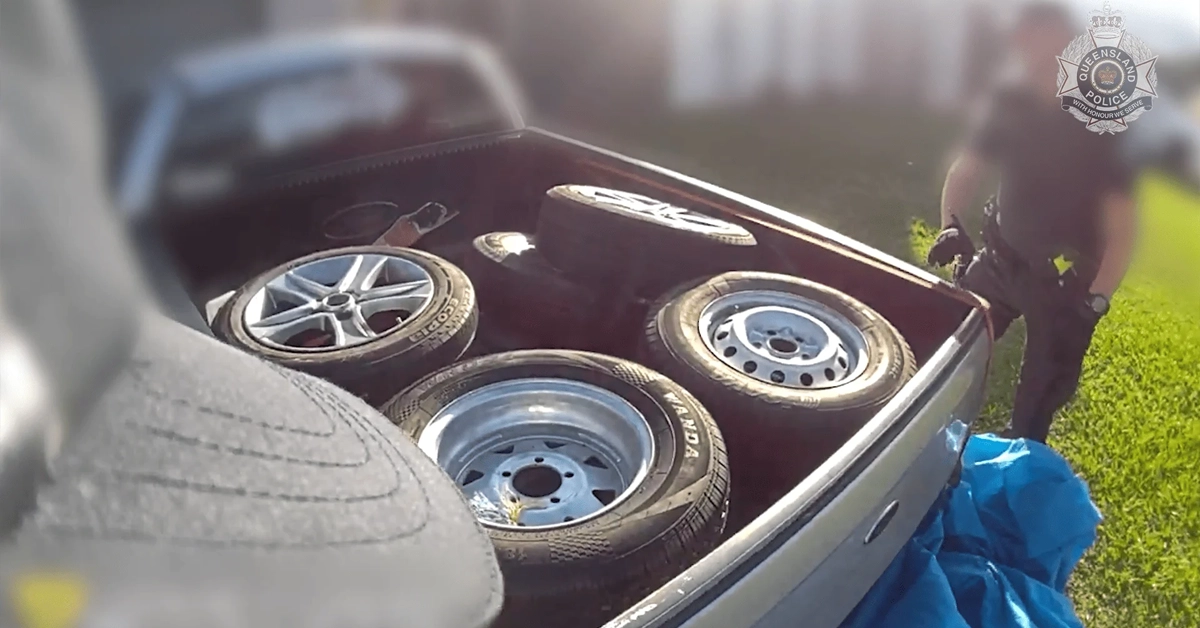
Six Charged Over Gateway Bridge New Year’s Eve Hooning Incident

Six people have been charged with a total of 40 offences following a police investigation into hooning activity on Gateway Bridge on New Year’s Eve, with authorities seizing 13 vehicles during the operation.


Queensland Police allege several vehicles blocked northbound lanes of the Gateway Motorway at Murarrie around 11.50pm on 31 December 2025, where a group performed burnouts and let off fireworks before fleeing the scene prior to police arrival.

Detective Acting Inspector Sean Webster from North Brisbane District said the behaviour captured on social media footage posed serious risks to both participants and the wider community.

“Police will not tolerate driving dangerous acts of this nature,” Detective Acting Inspector Webster said in a statement released by Queensland Police Service on 20 January 2026.

He noted that footage showed people hanging out of cars while burnouts were being performed, describing the conduct as “very dangerous”.

Multi-region operation launched

In response to the incident, police established Operation Yankee Reacher, a multi-region policing operation led by Brisbane City Criminal Investigation Branch with support from CIBs, Highway Patrol and Tactical Crime Squads across South East Queensland.

Photo Credit: myPolice Queensland Police News

Investigators executed multiple search warrants at addresses across Alexandra Hills, Caboolture, Daisy Hill, Ebbw Vale, Ellen Grove, Kingston, Logan Village, Ormeau, Waterford and Waterford West.

Photo Credit: myPolice Queensland Police News

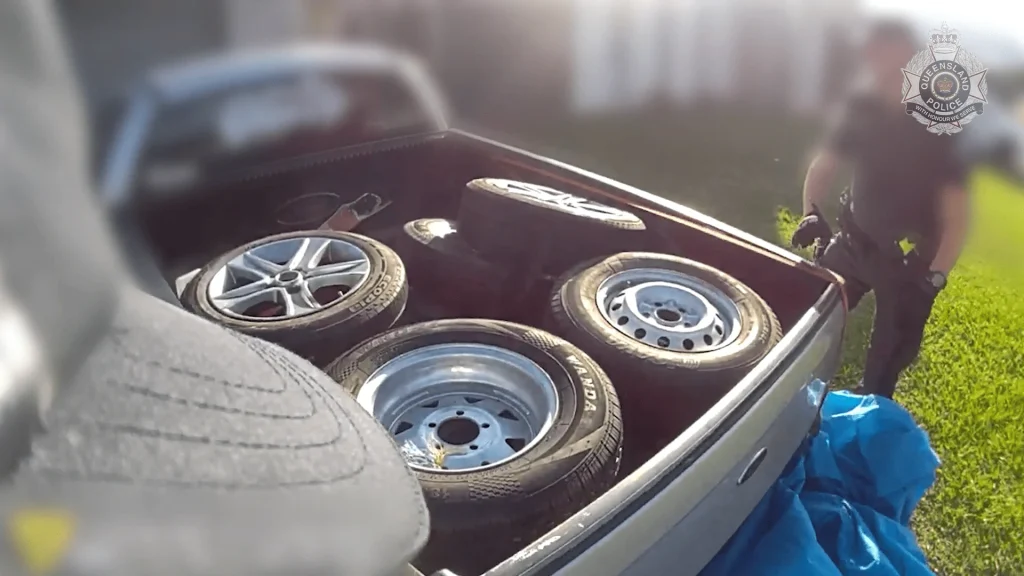
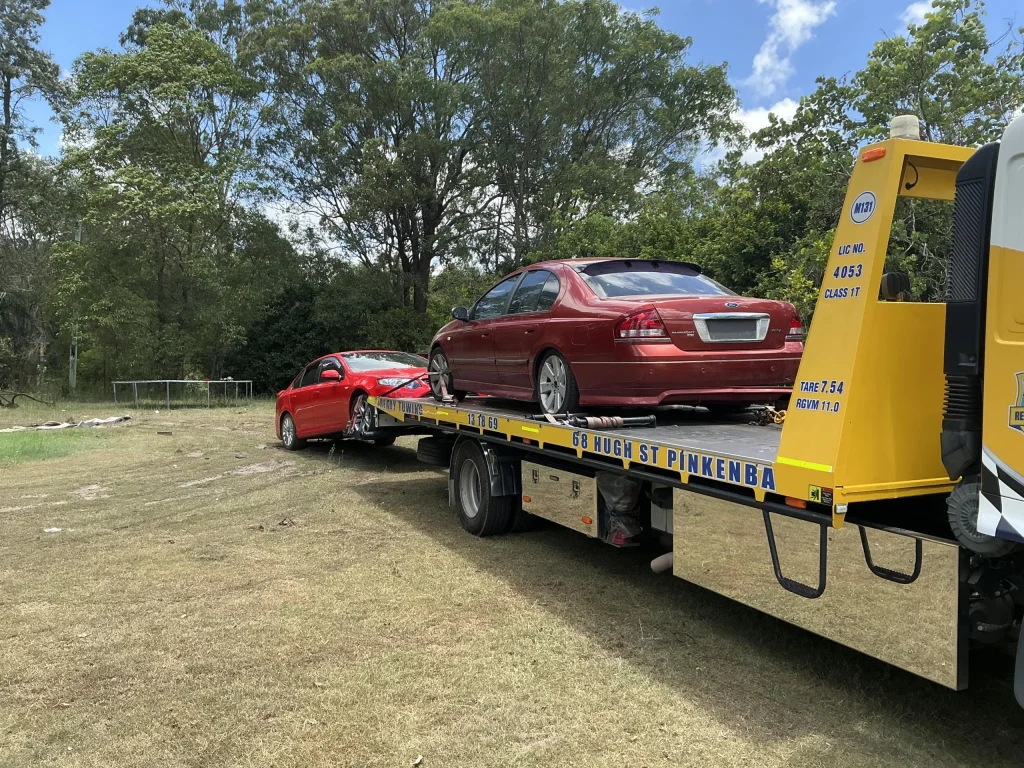
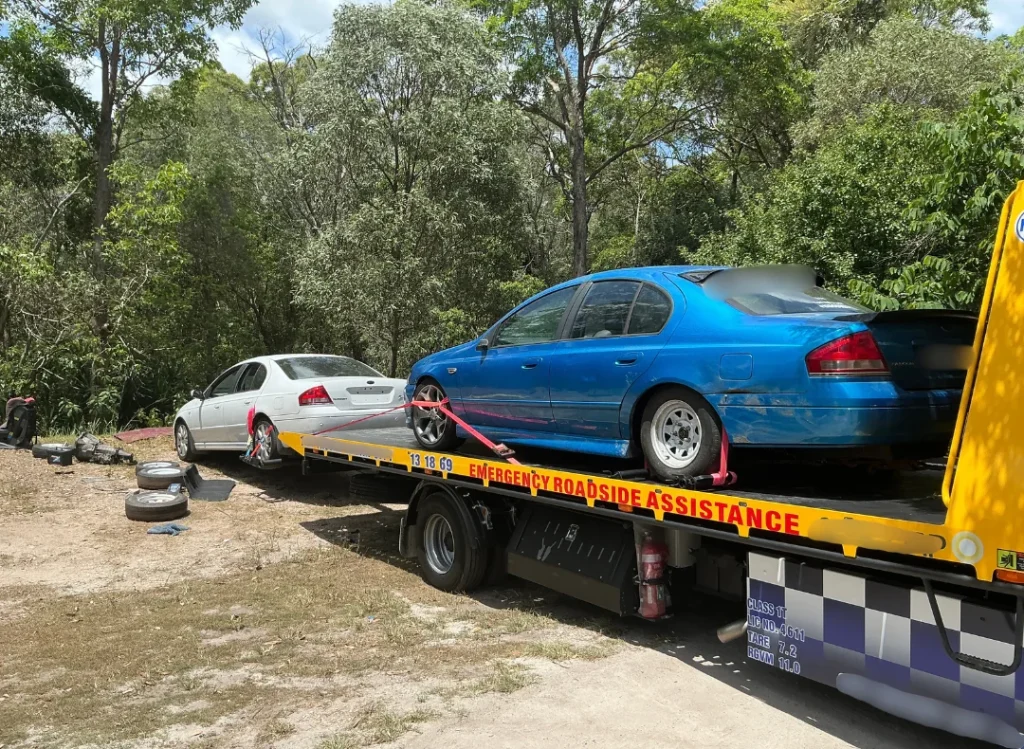
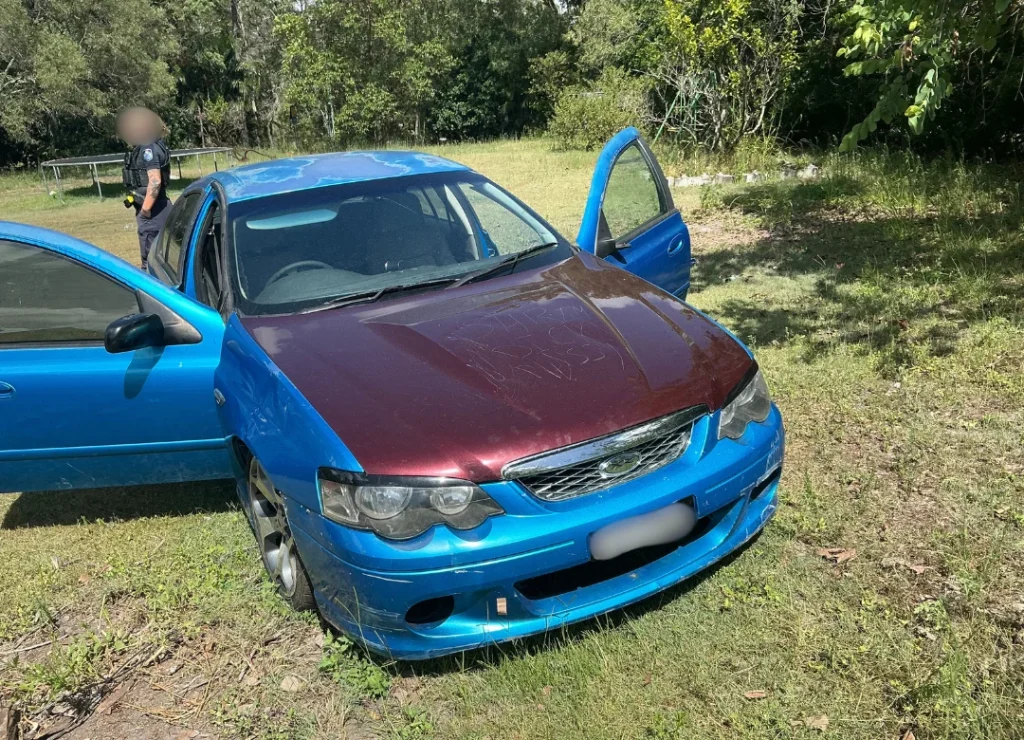
The 13 seized vehicles included a black Ford utility and multiple Ford Falcons in various colours. Police believe nine of the vehicles were involved in the New Year’s Eve incident, while three were allegedly stolen vehicles discovered during a search warrant at a Logan Reserve Road address in Waterford West. One vehicle was allegedly used in a separate hooning incident.

Charges and court appearances

The six people charged range in age from 16 to 52 years old and face various offences including dangerous operation of a vehicle, participating in hooning group activity, and driving unregistered and uninsured vehicles.

Three teenagers aged 16, 18 and 19 have been charged with dangerous operation of a vehicle involving publishing material on social media, among other offences.

A 52-year-old Logan Village man faces weapons charges after police allegedly found an unregistered air rifle and rifle during a search warrant at his property. He is expected to appear before Beaudesert Magistrates Court on 3 February.

Additionally, two 21-year-old men from Logan Village and Daisy Hill have been issued with traffic infringement notices totalling fines and demerit points for offences including wilfully starting or driving a vehicle in a way that makes unnecessary noise or smoke, and spectating without reasonable excuse in hooning group activity.

Further arrests anticipated

Detective Acting Inspector Webster confirmed investigations remain ongoing and police anticipate further arrests.

“We hope this sends a clear message that hooning and that sort of dangerous driving is unacceptable and is something that police take seriously,” he said, according to a report published by ABC News on 20 January 2026.

Police have urged anyone with information, dashcam footage or CCTV that may assist enquiries to contact Policelink on 131 444 or Crime Stoppers on 1800 333 000.


The enforcement action forms part of ongoing operations to detect and deter dangerous driving behaviours, building on Operation Xray Antler and day-to-day police activities focused on road safety.

Published 20-January-2026

Brisbane’s Elevated Workout: Your Guide to the Gateway Bridge Walk

In an era where fitness trackers buzz with daily step goals, Brisbane offers a breathtaking way to clock those numbers – the Gateway Bridge walk. 


Read: Bridge to Brisbane 2024: The Ultimate Challenge from Murarrie


This impressive feat of engineering doubles as an urban fitness trail, delivering around 6,600 steps of your daily target while treating you to panoramic views of the working Port of Brisbane and Moreton Bay. 

For residents seeking to combine their daily exercise with stunning riverscapes, this architectural icon, officially known as the Sir Leo Hielscher Bridge, transforms a regular fitness walk into an elevated adventure.

The Route

Photo credit: Anita Hayward/Google Maps

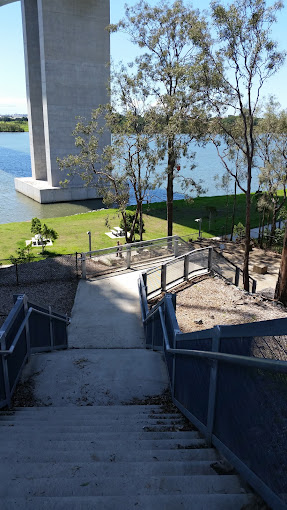
Starting from Queensport Rocks Park, this well-maintained path takes you on an impressive journey up and over one of Brisbane’s most iconic structures. The bridge’s generous walking path accommodates both pedestrians and cyclists, making it a popular spot for fitness enthusiasts.

Alternative Starting Points

For Cyclists

Photo credit: Karen Natasha Mazarello/Google Maps

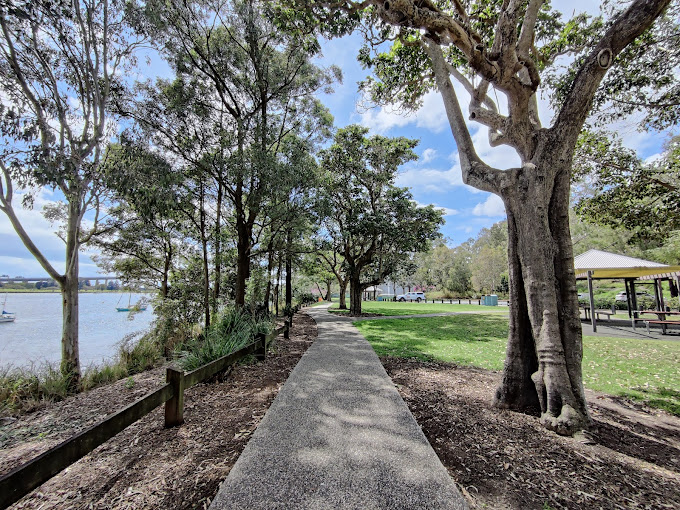
Cyclists can extend their ride by beginning at Colmslie Beach Reserve. From here, follow the dedicated cycling path that runs along Lytton Road until you reach Metroplex Avenue. Take a left turn into Metroplex Avenue, and this will lead you to connect with the main bridge path.

For Walkers Seeking Extra Distance

Gateway Bridge
Photo credit: Evening LX/Google Maps

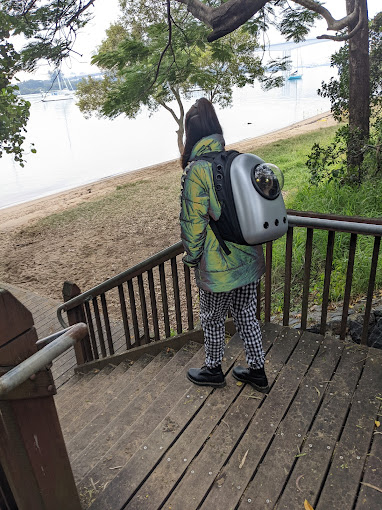
Those looking to add more steps to their journey can also start from Colmslie Beach Reserve. When you reach Metroplex Avenue, take the path to the right of the small bridge. This scenic detour rewards you with wetland views and excellent birdwatching opportunities before connecting to the main bridge walk. The wetlands area is particularly active in the early morning, making it an ideal time to spot local wildlife.

Tips for Walkers

  • Timing: Choose early morning or late afternoon to avoid peak sun exposure
  • Water: Bring a water bottle, despite available fountains
  • Sun Protection: Hat and sunscreen essential – limited shade on the bridge
  • Photography: Multiple vantage points offer excellent photo opportunities
  • Fitness Level: Consider turning back at the peak if the full journey seems challenging

What to Expect

Gateway Bridge
Photo credit: Tomek Jampolski/Google Maps

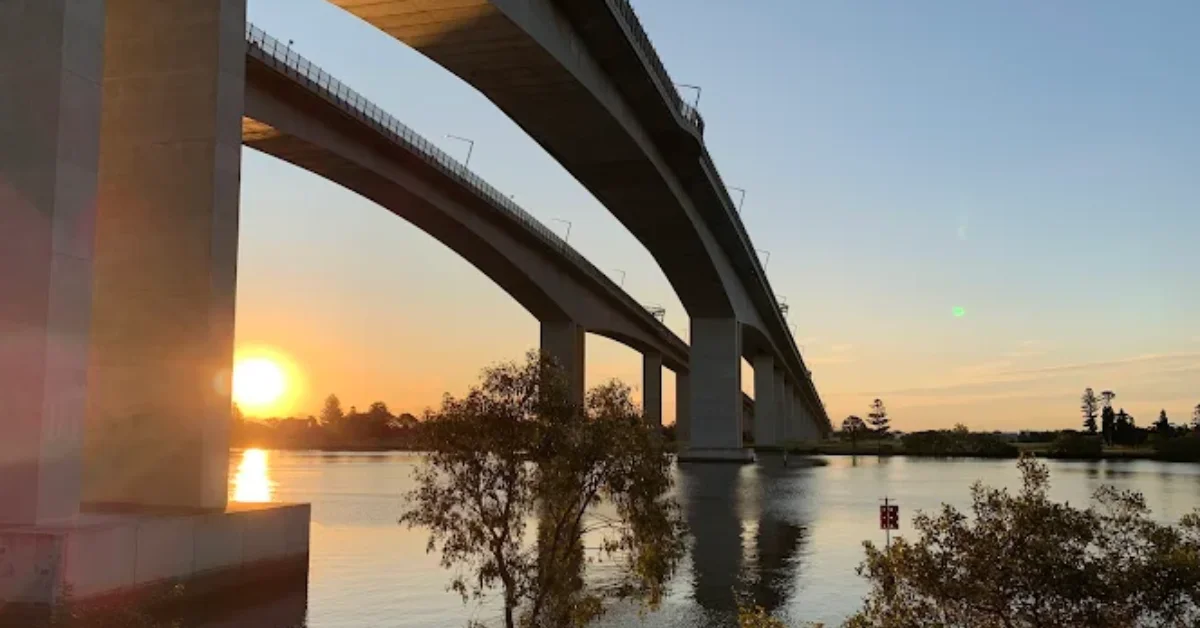
The Gateway Bridge walk begins gently but quickly transitions into a steady incline. The gradient provides an excellent workout without being overwhelming. Strategic rest points allow walkers to break the journey into manageable segments while enjoying stunning views of Brisbane’s maritime activity and distant bay views.


Read: Balmoral Cycling Club’s Rising Stars Set for UCI Track Cycling World Championships


This walk offers a perfect blend of urban adventure and fitness challenge, making it a must-try for both Brisbane locals and visitors looking to experience the city from a different perspective.

Published 31-October-2024

42-Berth Marina Planned for Commercial and Tourist Boats in Murarrie

A 42-berth marina will be built near the Gateway Bridge, on the Brisbane River, at Raptis Seafoods in Murarrie. This marina will support maritime tourism by offering overnight anchoring for business and tourist boats as part of the Growing Future Tourism strategy.


Once built, the marina will provide a much-needed docking option for Brisbane’s maritime tourism operators, especially after recent obstacles like the 2022 floods and waterfront developments. However, it is not meant to be a pick-up and drop-off location for tourists. 

With construction clearances pending, the marina is anticipated to open in April 2025.

Tourism Initiatives

According to projections, the marina will bring in $66.6 million in private investment from the $15 million the Queensland government has allocated to five tourism initiatives. This financing will maintain 669 ongoing operational functions and about 313 jobs during planning and construction. The combined effect of these developments is anticipated to bring in over 216,000 extra tourists per year, translating into an extra $63 million in spending. The projects are expected to be finished by June 2026.

This effort includes a 50-meter jetty at Lindeman Island Resort, eco-cabins at Australia Zoo’s Crocodile Hunter Lodge, and a marine tourist hub at Townsville’s Flinders Street Wharves.

Growing Future Tourism, QLD QLD Dept of Tourism & Sport
Photo Credit: QLD Dept of Tourism & Sport

Michael Healy, the Minister of Tourism, highlighted the marina’s role in giving river tourist companies a secure foundation and commended Raptis and the Queensland Government for their cooperation. He also emphasised the Growing Future Tourism program’s contribution to developing fresh travel alternatives in the area.

The CEO and spokesperson for Raptis Investments, Tim Beirne, highlighted the importance of the marina’s project in boosting local tourism and stated the company’s excitement about obtaining money for it. In line with the rising demand for coastal and aquatic experiences, he highlighted that repurposing Raptis Seafoods wharves would provide security for home porting, encourage investment, and generate new job possibilities in the tourism sector. 

About Raptis

In the 1930s, Arthur Raptis Sr., a migrant labourer, discovered his calling in fishing. In the 1950s, after relocating to Adelaide, his wife Anna started a fish and chip store. Their desire to succeed as entrepreneurs drove them to fillet their catch for nearby stores. Their daughter and four sons joined in, growing the company into retail and wholesale seafood.


A. Raptis and Sons Pty Ltd (Raptis) is one of the biggest privately held fishing firms in Australia today. Raptis is a local and international supplier of high-quality seafood products, emphasising responsible fishing practices. Australia’s fish populations will flourish for future generations thanks to their dedication to sustainable techniques. From the ocean to the plate, Raptis maintains premium seafood by utilising technology.

Published 18-March-2024

Drones to Catch Hoons to be Deployed Following Gateway Bridge Incident in Murrarie

Traffic cops have long witnessed hooning on the Gateway Bridge. This dangerous escapade on the bridge linking Murrarie and Eagle Farm will soon be contained with the help of a fleet of hi-tech, airborne surveillance drones.


In its bid to reinforce and strengthen its crackdown on hooning activities, the Queensland Police Services (QPS) has invested in covert drones to catch more offenders on the road. Officers are currently under training to learn how to become drone pilots as the agency increases its crime-fighting tools. 

In Gold Coast, drones have been a successful part of Operation Tango Vinyl, which has led to the arrest of 99 individuals who were charged for dangerous driving. More than 20 vehicles were also seized whilst 400 people were issued infringement notices. 


Highlights

  • Queensland Police Services is preparing to launch a fleet of drones to tackle hooning across the region.
  • Officers have been undergoing training to become drone pilots.
  • Drones have been effective in Gold Coast, where the QPS conducted Operation Tango Vinyl, which led to the arrest of 99 offenders.

Meanwhile, a QPS spokesperson said that video of the hooning incident in Gateway Bridge led to the arrest of motorists who were also charged for not wearing a seatbelt and for driving under the influence of alcohol.

The cops are also investigating a lead into another vehicle that dangerously drove on the bridge. Its hooning video has gone viral on social media.   

@hootr7

##infamous ##skids ##brisbane ##gateway ##FTP

♬ original sound – rarehoot

“These changes will provide police with enhanced flexibility when dealing with gatherings of hoons,” Police Minister Mark Ryan following the announcement of the QPS’ investment in these drones. 

“For example, if dozens of cars were hooning in a particular location, police would be able to use these new hi-tech cameras to capture images of all the vehicles. The high-resolution images would allow police to identify each vehicle, and then proceed to take action against the registered owner unless the owner could demonstrate they weren’t driving at the time.


“The expanded laws would apply to a greater range of traffic offences caught on camera. An offender would no longer be able to avoid prosecution by simply masking their identities and denying they had been behind the wheel.

“There’s no apology for targeting these reckless drivers.”